Hacker News Read Tao's Warning About AI Proofs and Spent 94 Comments on Orchestra Pay
Terence Tao's 6 post thread on AI-generated proofs drew 126 favourites. The Hacker News thread that followed it ran to 94 comments, most of them about whether orchestral musicians have side gigs.
The WJS Desk
Sep 8, 2026 · 8 min read
On 3 September, over six posts in two minutes, Terence Tao made an argument that is easy to misread and got misread almost everywhere it travelled. The final post has 126 favourites and 55 boosts as of our reading. The claim is not that AI should stay out of mathematics. It is that solving a famous problem the wrong way can make the field worse off than leaving it open.
Three days later the argument was on Lobsters at 85 points and on Hacker News in the form of an essay responding to it, at 78 points and 94 comments (all counts here read on 7 September at 13:30 UTC). Tao's own post was also submitted to Hacker News directly. It got 3 points and zero comments. The commentary outperformed the primary source by a factor of 26, which is its own small story about how this stuff propagates.
The argument, at its strongest
Tao's example is the global regularity problem for the incompressible Navier-Stokes equations. His point is that nobody actually needs the answer. Computational fluid dynamics is mature and deployed; a theoretical regularity guarantee would be interesting but would not change weather modelling. What the problem has produced instead is a century of machinery: Leray-Hopf weak solutions, the Beale-Kato-Majda blowup criterion, the Prodi-Serrin partial regularity theorems, and Tao's own detour into fluid computation and Turing universality, which turned up unexpected connections to symplectic topology.
The mechanism he describes is specific. Progress comes from picking an ansatz, discovering exactly why it fails, adjusting, iterating. And then the load-bearing sentence:
"Crucially, this iteration would only work well at producing such insights if the iterator did not have access to the final ansatz in advance, as this naturally inhibits the exploration of alternate routes to the ansatz that are superficially 'dead ends', but in fact end up being highly instructive in the nature of their failure."
So the scenario he fears is not a machine doing mathematics. It is an autonomous harness running that entire iteration internally, at a scale no human group can match, and a company publishing the result while keeping the path out of public view. His conclusion, from the sixth post:
"Prematurely solving the problem by purely AI-powered methods ... can contaminate this process to the point where it actually becomes a net negative for the progress of mathematics as a whole."
The clause the summaries kept dropping sits in the middle of that sentence: "particularly without full transparency into the solution process". Tao also added a reply, itself at 69 favourites, that we have not seen quoted anywhere: "A clarification in response to recent rumors about a possible solution to the Navier-Stokes problem: I am not aware of any significant developments in this regard; the above discussion is hypothetical." He is arguing about a scenario, and he said so.
The strongest version of the other side
Stated fairly, the opposing case is that a proof is a starting point, not an ending. BenjaminRi on Lobsters put it in two sentences: "I do want to know. If AI figures it out, we can start from there and trace back the steps. Understanding the solution starting with the complete proof is much easier." Mathematicians have never refused a result because they did not personally derive it, and the machinery Tao lists was built by people standing on other people's finished theorems.
The counter-counter is that Tao's mechanism only breaks if the path is hidden. If the harness publishes its dead ends, the argument mostly dissolves, which makes this a documentation problem. We will come back to that.
Three communities, three different arguments
This is where reading all three threads pays off, because they are not having the same conversation.
On Mastodon, where the post actually lives, people engaged the mechanism. hvc asked the sharpest question: "I wonder whether the two paths must be in conflict. An AI-derived solution and a fully human, transparent, pedagogical development could coexist." That opened a subthread where mnl@hachyderm.io drew a parallel to hacking through a software problem without learning the fundamentals, and 4ad attacked the analogy head on: "The steam engines that predate thermodynamics were useless, and they were useless precisely because their 'creators' didn't understand the fundamentals and couldn't predict their behavior."
On Lobsters, 85 points produced exactly two comments, and they were a clean split. gignico: "Pure mathematics has beauty because it comes from the human mind. Automation disturbs that beauty. I don't want to know whether P=NP, I want to meet the person who discovers the answer by themselves and learn from them." Then BenjaminRi's reply above. Two positions, no middle, and one of the highest score-to-comment ratios we have seen on that site. People agreed hard and had nothing to add.
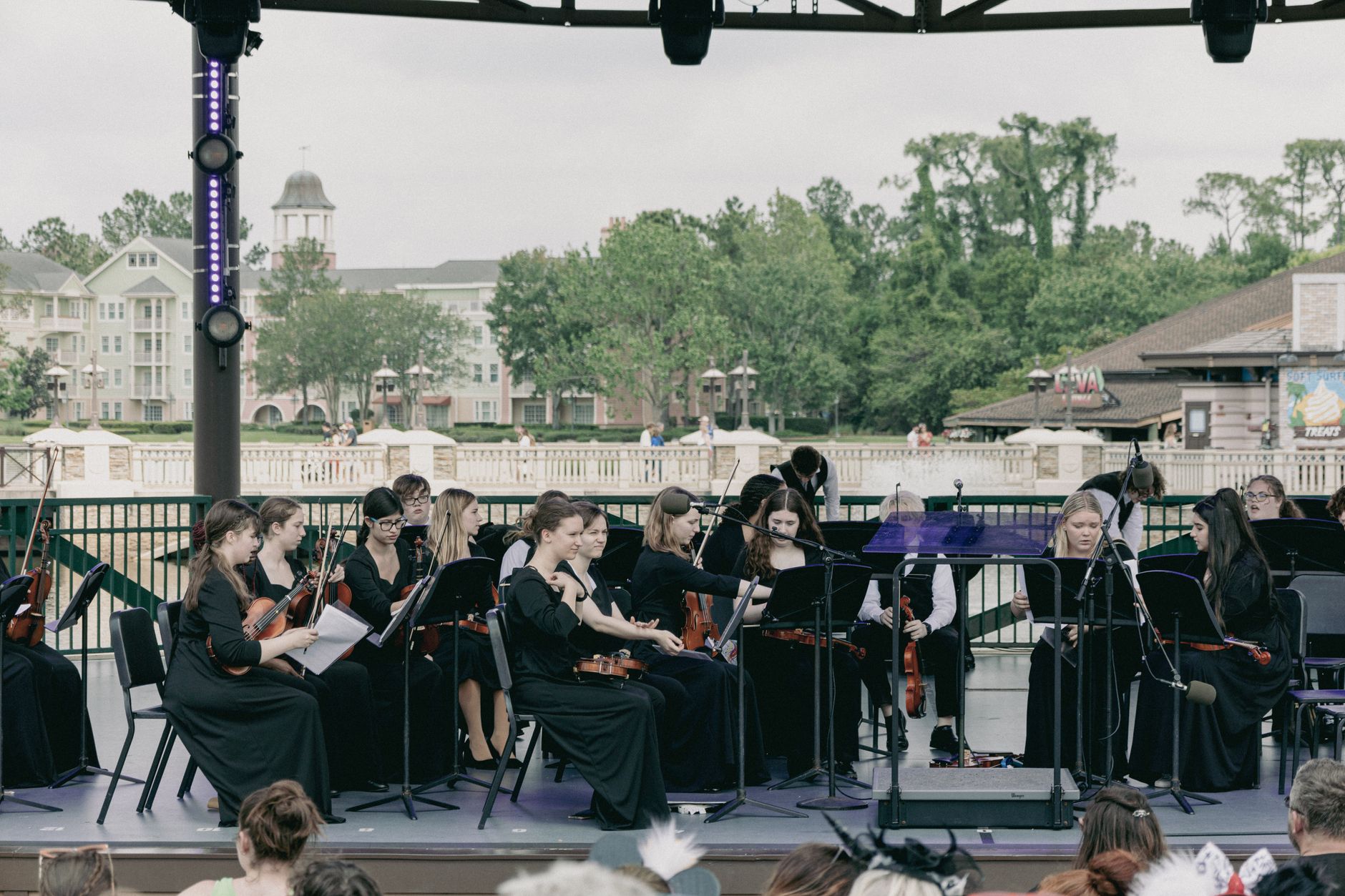
On Hacker News, the 94 comment thread is mostly not about mathematics. It attached to the essay's framing analogy (that pure maths might get institutionalised the way classical music was) and litigated the analogy instead of the claim. encomiast corrected the essay's economics: "A principal player in a major symphony orchestra in the United States makes $250k-400k a year. These are extremely competitive jobs and they are paid well." sdenton4 supplied the counterweight from experience: "There were about eight jobs in the entire country for orchestral flautists." VladVladikoff found the real hole in the analogy: "music is universally accessible, while high level mathematics is not."
All of that is true and none of it touches whether an opaque proof damages a field. One comment, from madrox, named why the thread went that way: "We are largely having a reckoning with whether a discipline is the process or the outcome." That is Tao's argument restated in a line, arrived at independently, and the thread then went back to wedding gigs.
Note on scores: Hacker News does not publish per-comment points, so we cannot rank these and we are not going to invent numbers. The Lobsters and Mastodon figures above are the ones those sites actually show.
The best comment nobody boosted
Buried mid-thread on Hacker News, one reply, nxpnsv made the only economic argument in the thread:
"A lot of the boom in AI maths results are solving human formulated problems mostly for PR benefit. Once the novelty passes, would Anthropic or OpenAI keep spending? And without mathematicians to ask the right questions and able to appreciate the results, why would AI driven research continue?"
That reframes the panic. Tao's scenario requires a lab to spend enormous compute on a problem with no commercial application, then publish the answer without the workings. The first half only happens while the marketing value holds, and that depends on mathematicians caring. The threat model is self-limiting in a way nobody else in the thread noticed. busyant replied with the correct pushback: why assume the AI will not be able to formulate the questions itself?
We went and read the proof everyone was citing
The essay that started the Hacker News thread cites a recent AI-assisted result: Wang and Wu proving the spherical Hadwiger conjecture. The author is candid that he has not fully checked it, writing "I worked through it with Claude Fable and it passes the sniff test, but fully digesting it will take a bit more energy than I have right now." Nobody in either thread appears to have opened the paper. We did.
It is arXiv 2608.27305, "The Spherical Hadwiger Theorem", by Suijie Wang and Shengguo Wu, submitted 27 August 2026, six days before Tao's post. The paper dates its own problem: according to Schneider, the spherical Hadwiger problem was probably first formulated, in an equivalent conic form, by McMullen in 1974. That is 52 years open.
And at the end, after the funding acknowledgements, there is a section headed "Declaration on the Use of AI":
"During the preparation of this manuscript, OpenAI Codex was used to assist with developing proof details, identifying gaps and points requiring clarification, organizing and typesetting the manuscript, and editing the English. The authors reviewed and verified all AI-assisted mathematical content and suggested changes, made all final mathematical and editorial decisions, and take full responsibility for the manuscript."
Read that against Tao's objection. He is worried about results arriving "without full transparency into the solution process". This paper names the tool, enumerates the four things it did, states that humans verified the mathematics, and assigns responsibility. It is the transparent case, and it landed before the warning did.
The norm already exists. A "Declaration on the Use of AI" section, at the granularity of which tasks the model performed, is a solved documentation problem. It costs one paragraph. The gap is that it is voluntary.
What happens in seven weeks
There is a scheduled test of all this that neither thread connected to the argument. From 30 October to 1 November, Caltech is running what it calls the first hackathon ever devoted to research level mathematics: 100 teams, 40 hours, frontier models, and more than $2M in AI credits. It sat on the Hacker News front page at 63 points and 14 comments while the philosophical thread ran at 94.
The rule that matters is in the format. Teams "defend their results before leading mathematicians, who will assess their understanding", with a second round of prizes after community verification. That is not an answer to whether AI should do mathematics. It is an answer to Tao's actual objection: you do not get credit for an artefact you cannot explain. Whether 100 teams under a 40 hour clock can produce anything that survives that filter is exactly the experiment worth watching.
Our read
Tao is right, and most of the people arguing with him are arguing with a position he did not take. The word doing the work in his thread is "transparency", not "AI", and the Wang and Wu paper is the existence proof that the transparent version is available today and costs a paragraph.
The problem is not that a machine might solve it. The problem is a solution arriving with the workings deleted, and we already know how to write the workings down.
What would change our mind: a result of Navier-Stokes magnitude landing with a full published trace of the failed ansatzes, and mathematicians still reporting they learned nothing useful from it. That would mean the insight really does live in the human struggle rather than the record of it, and Tao's concern would be much harder to fix with a disclosure section. Until someone runs that experiment, the cheap fix is to make declarations like Wang and Wu's a submission requirement rather than a courtesy.